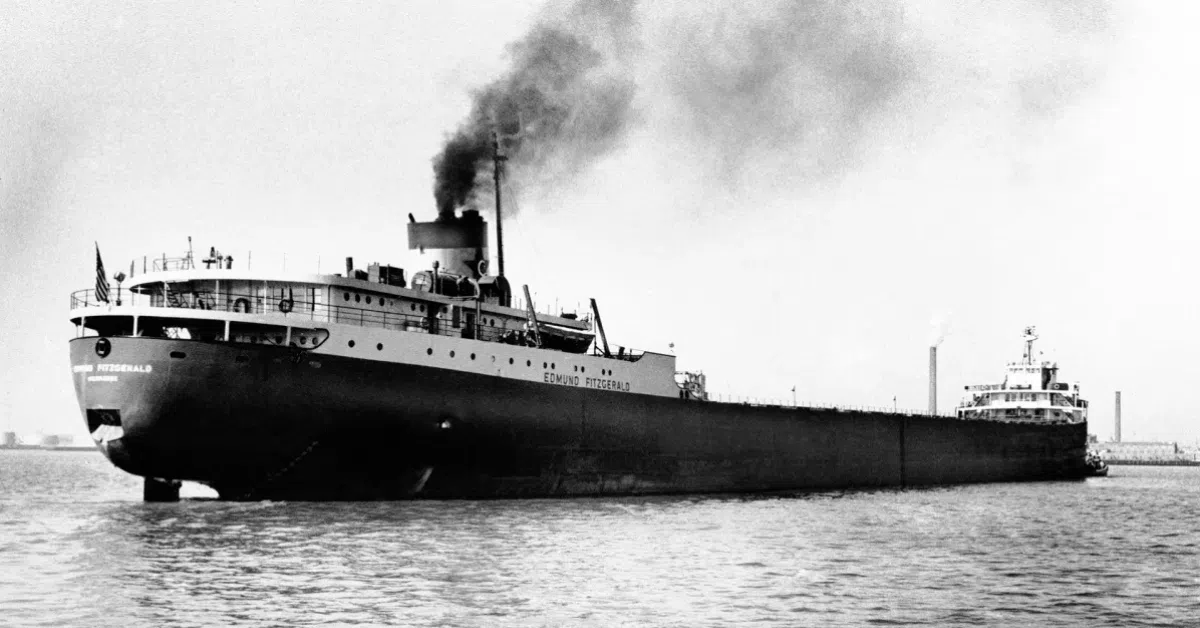
Fifty years ago today, on November 10, 1975, the SS Edmund Fitzgerald sank beneath the icy waters of Lake Superior, taking all 29 crew members with her. The tragedy remains one of the Great Lakes’ most haunting maritime disasters, immortalized by Gordon Lightfoot’s ballad The Wreck of the Edmund Fitzgerald. The song, released a year later, transformed the story from a regional heartbreak into a timeless piece of American folklore.
The Fitzgerald was a massive freighter more than 700 feet long hauling iron ore from Superior, Wisconsin, to Detroit when it was caught in a brutal November storm. Winds reached hurricane strength, and waves towered over 25 feet high. Despite being one of the most advanced ships on the Great Lakes at the time, the Fitzgerald lost radar contact and disappeared from sight just after 7 p.m.
The wreck site rests about 530 feet down, roughly 17 miles from Whitefish Bay, Michigan. But the story has long resonated across Minnesota, where so many families have deep ties to shipping, iron mining, and the Great Lakes. Duluth, in particular, feels the connection each year as visitors gather near the Aerial Lift Bridge to watch ships navigate the same waters that claimed the Fitzgerald.
Lightfoot’s haunting lyrics still echo the power of the lake that “never gives up her dead.” Half a century later, the song and the story remind us of both the might of nature and the bravery of those who work upon the Great Lakes.